


Chicago Cubs’ centrefielder Pete Crow-Armstrong had exactly 100 at-bats in the month of August 2025. He went 16-for-100. That’s a .160 batting average for those of you mathematically challenged.
The bubble of his breakout season had burst. Pitchers had sussed him out. His .160/.216/.230 triple slash for the month was probably the worst in the Cubs’ long history.
As his team pushed for the playoffs with a decent 29-25 run over the final two months, PCA’s season nosedived with a .188 AVG (.533 OPS) over those 54 games.
But it was still a magnificent season. The 23-year-old had secured his first All-Star appearance, first (of likely many) Gold Glove awards, and finished ninth in NL MVP voting. By any metric it was a stunning sophomore year, but one tinged with the disappointment of how his production simply fell off a cliff, plagued by a ballooning chase rate and no answer to opponents consistently exploiting his free-swinging aggression.
Roll on 2026, and what could we expect? Was PCA an elite, game-changing toolset wrapped in an approach that just needed a tweak, or was he simply a flash in the pan destined to be exposed once pitchers stopped giving him anything to hit?
Leaning into fantasy baseball obsessives who spent the whole offseason devouring every statistic and projection, Crow-Armstrong was deemed the 20th best hitter in the game. As if to prove what a pointless waste of time offseason fantasy prep is, Cal Raleigh was projected to be sixth-best in 2026 and Kyle Tucker ninth.
But it demonstrates that to casual fans and paid analysts alike, there was an assumption that PCA’s true talent was somewhere between his 25-homer, .847 OPS first half and his cliff-dive second.
Everyone was wrong… okay, except you. You are the only baseball fan who expected a 10-WAR season.
Rather than regressing into a wild-swinging defensive specialist, PCA underwent a staggering transformation at the plate without sacrificing a shred of his trademark electric style. By coupling an improved approach in the box with his elite centrefield defence and game-breaking speed, he has established absolute control over the National League MVP race.
As the regular season comes to a conclusion, Crow-Armstrong has delivered video-game numbers:
44 HR | 115 R | 105 RBI | 37 SB
His slash line of .277/.369/.571 surpasses the hope of even the most blue-tinted-glasses wearing Cubs fans.
But to understand the sheer dominance of Crow-Armstrong’s 2026 is to look directly at the metric that front offices and fans alike treat as gospel: Wins Above Replacement. You can forget Pete Hegseth, it’s Pete Crow-Armstrong who is the real Pete in the Department of WAR (and yes, I did write the whole article just so I could crowbar that line in).
In mid-September, PCA breached the mythical 10-fWAR threshold, sitting atop the leaderboard at 10.1. To put that in perspective, he isn’t just leading the NL; he is running away from the rest of baseball at a speed that is almost incomprehensible.
Preseason NL MVP favourite Shohei Ohtani is in second place at 6.8 fWAR, but that is combining both his pitching and hitting value.
Take two-way freaks out of the discussion, and the gap between PCA and second-place Elly De La Cruz is 4.0 fWAR. A 4-win player is an All-Star. A 4-win player is Jackson Chourio. It’s Matt Olson. It’s Shohei Ohtani at the plate (3.8 fWAR) if he had hit a couple more dingers.
In fact, you have to travel back seven decades, to Mickey Mantle’s legendary 1956 Triple Crown season, to find a gap between the No. 1 and No. 2 players in baseball quite this vast.
Aaron Judge’s 2024 campaign of .322/.458/.701 with 58 home runs gave him a 3-WAR margin over Bobby Witt Jr., who also produced an MVP-calibre 8.1 fWAR season.
Other significant margin seasons include Barry Bonds over Sammy Sosa (2001), Barry Bonds over Alex Rodriguez (2002), and Pedro Martinez over Manny Ramirez (1999).
What sets PCA apart from these other winners is that he is a genuine five-tool player – not just a slugger-first (or a pitcher, in the case of Pedro).

With a whiff of Moneyball’s Billy Beane, young PCA had skills that give scouts stirrings. He passed up the opportunity to attend Vanderbilt and was drafted in the first round by the Mets. He only played six games for the St. Lucie Mets (where GB’s gold medal-winning U23 coach Jonathan Cramman is now plying his trade) before getting shipped to Chicago for 47 games of Javier Báez. You’ve got to love the Mets.
2026 has elevated him from intriguing and frustrating into the superstar that Middle America has yearned for. Even non-Cubs fans are captivated by Crow-Armstrong’s infectious energy – someone who views every high fly as highlight-reel potential and every single as an invitation to take second.
The only certainty for the 2026 MLB Player Awards is that Pete Crow-Armstrong will be crowned NL MVP. Whether he will be wearing a World Series ring when he receives the award will make the next six weeks compelling viewing.
Regardless of the Cubs’ fate, Pete Crow-Armstrong’s 2026 campaign will go down in the pantheon of the greatest individual seasons in modern baseball history.
The Cubs haven’t raised the Commissioner’s Trophy since that magical 2016 run, but with PCA anchoring the outfield and dominating the metrics, Chicago looks primed for a deep October push… if only they had some pitching.
And back in New York, the Mets can watch the playoffs and reflect on those 47 rental games they got from Javy Báez during their 77-85 season.
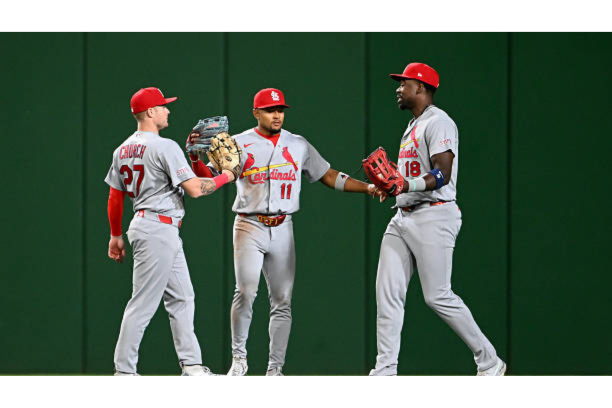
Featured image by Isaac Wasserman/Getty Images

Discover more from
Subscribe to get the latest posts sent to your email.











What is your opinion? Let us know